Natália Otrubová
Please share a bit about yourself and your background.
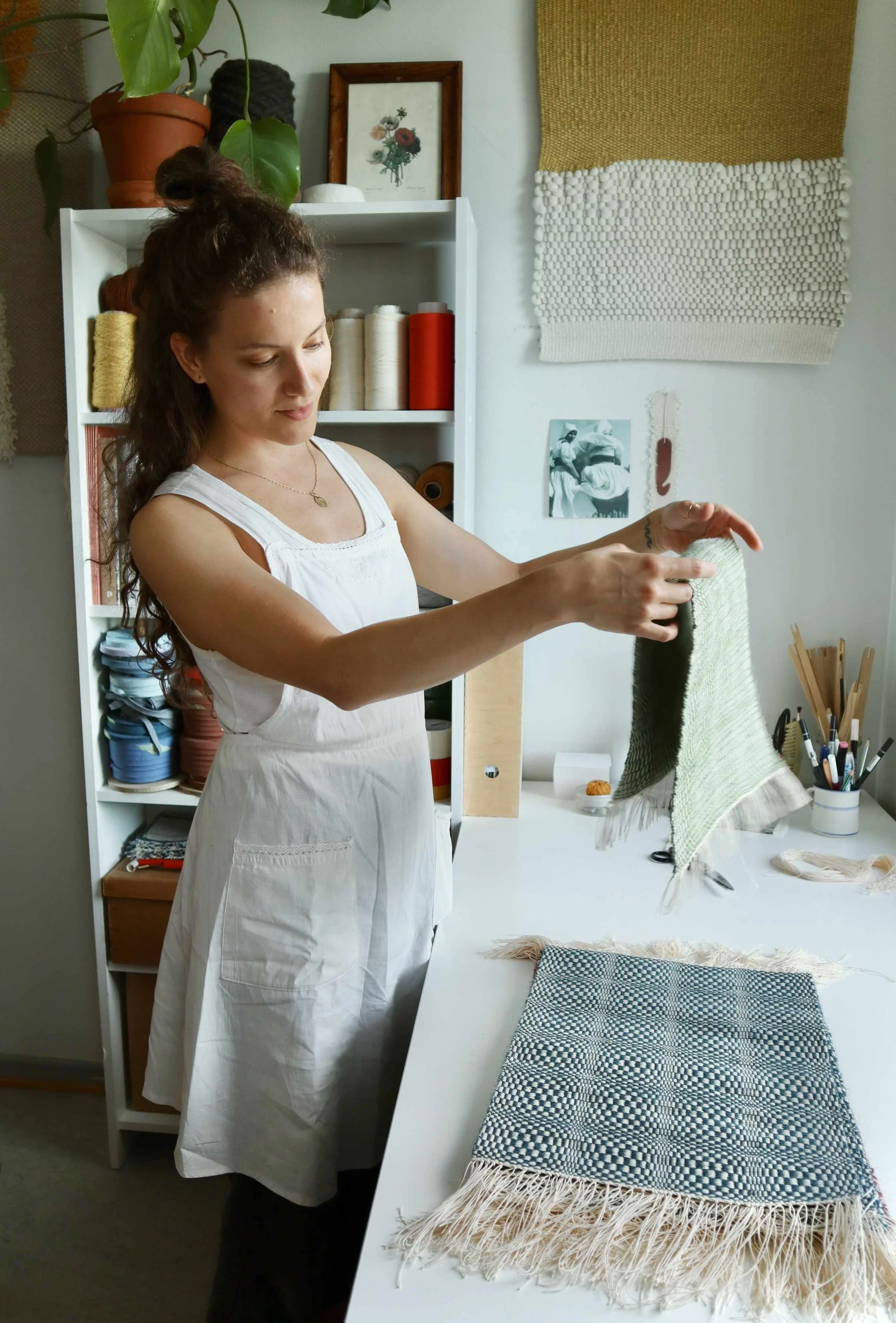
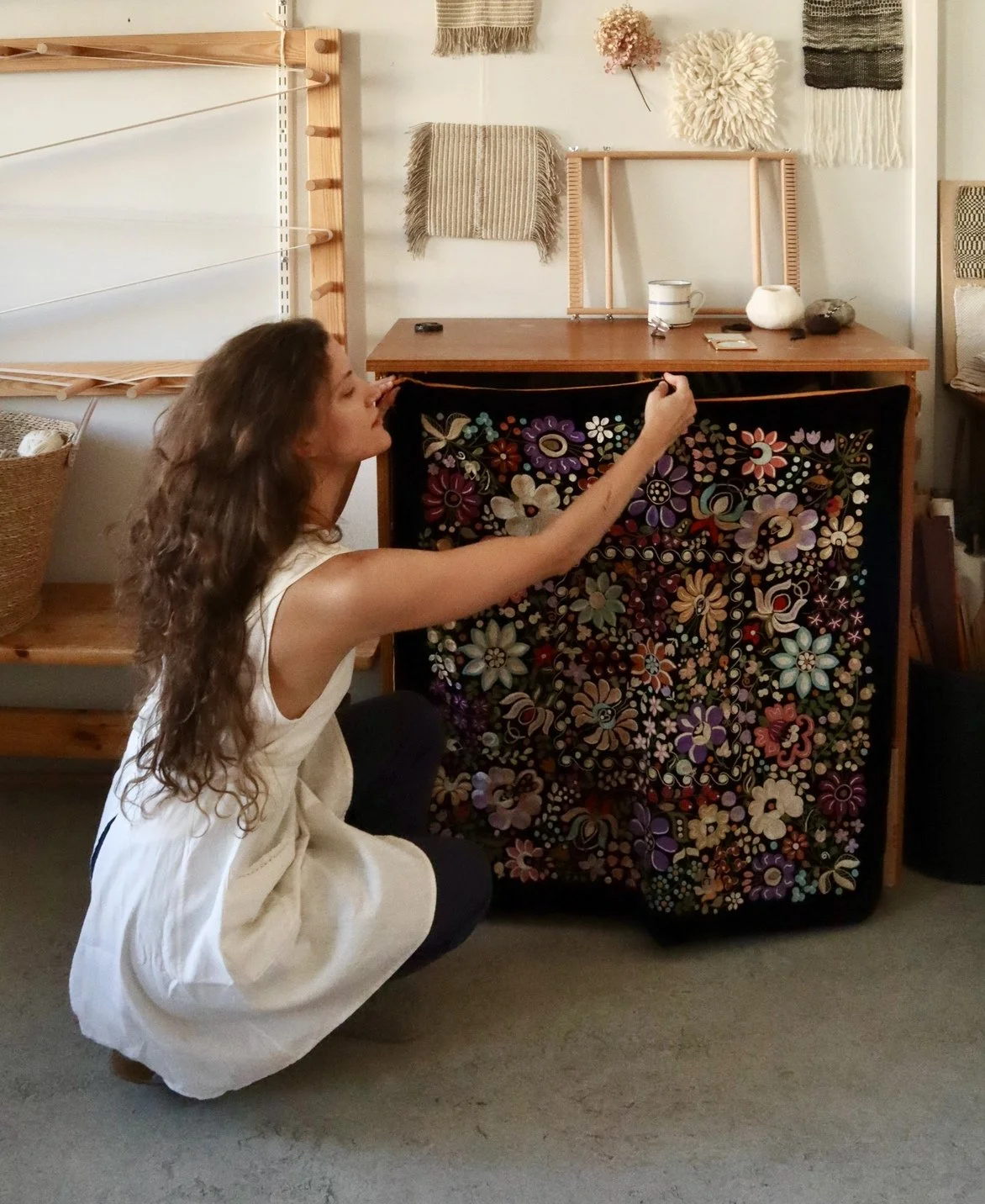
My name is Natália. I was born and raised in Bratislava, but I have been living in Finland for the past 8 years. Though I have an education in product and industrial design, since moving to Finland I have focused my work mainly on textiles. My practice stands at the intersection of art, crafts, and design, so I would describe myself simply as a maker rather than strictly an artist or designer.
What first drew you to weaving, and how did this craft become central to your creative expression?
I will go back to my last years at university, which were more of a struggle than having a clear vision of my future as an industrial designer. I didn’t see myself in that field, and I had no sincere interest in starting to work as an industrial designer at all. Somehow, I needed a deeper connection with the material, to have a more direct influence on the process of creating.
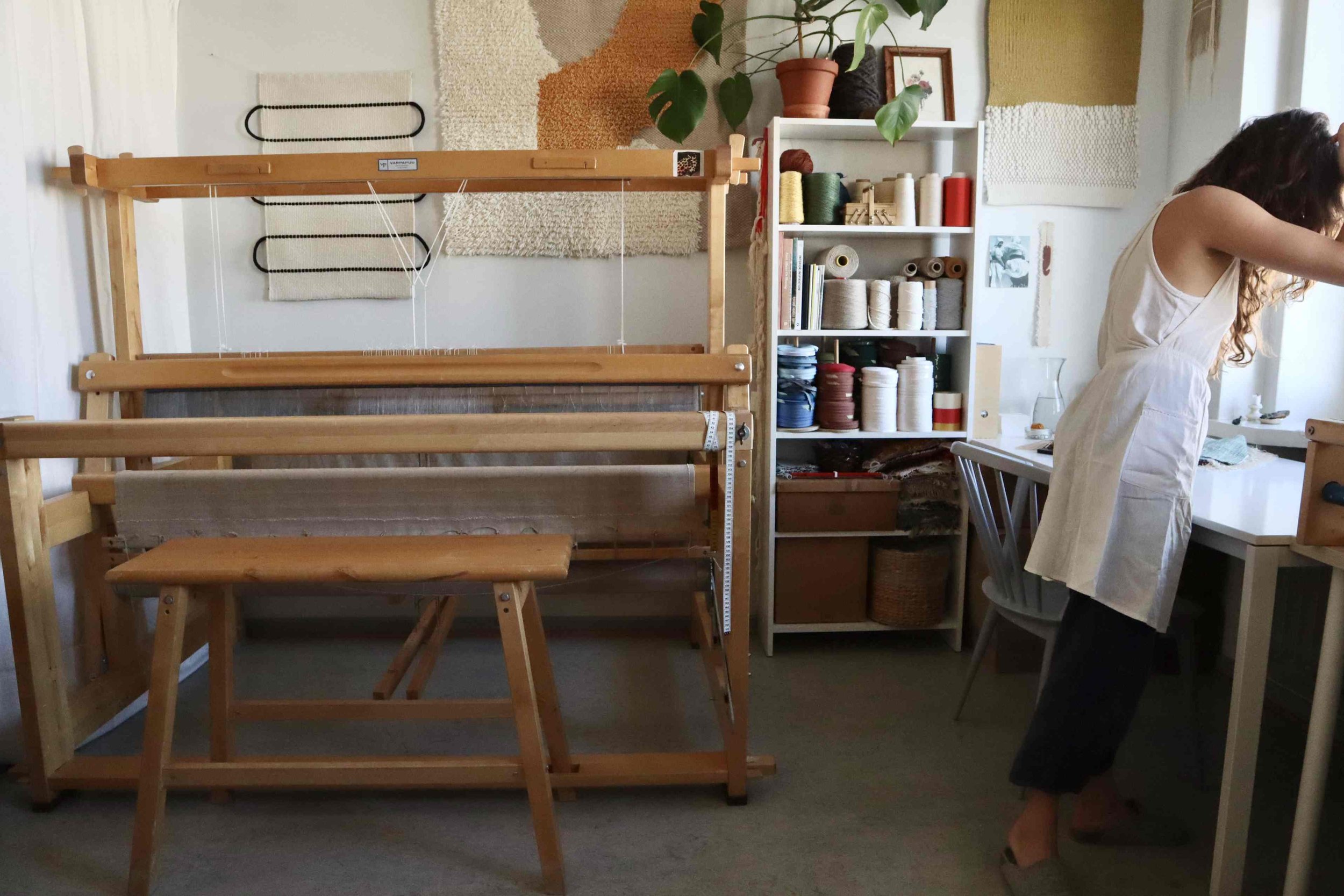
When I finally finished my bachelor’s degree, I wanted to leave Slovakia, to still experience living abroad before settling. I found this volunteering project in Finland, in the small town of Vihti, in a weaving workshop for people with learning disabilities. So it was an incredible coincidence, even fate. I was able to move abroad and spend a year in the workshop, where I learned to weave while working in this inspiring community.
Pretty fast, weaving became an absolutely fascinating craft to me. After work, I stayed in the workshop until late at night to weave and explore the craft and looms as a tool. I was amazed by the potential of weaving, by how many different factors affect the final product. From the choice of material, to the thickness of the thread, to the density of the warp. And the fact that the craft itself is one of the oldest in human history, dating back thousands of years.
Oh, I can go on and on about this, but really, it felt like something clicked. I knew that this is what I would devote myself to!
Can you walk us through your process? What does your making process look like, and are there any rituals, routines, or moments of slowness that help you reconnect with the material?
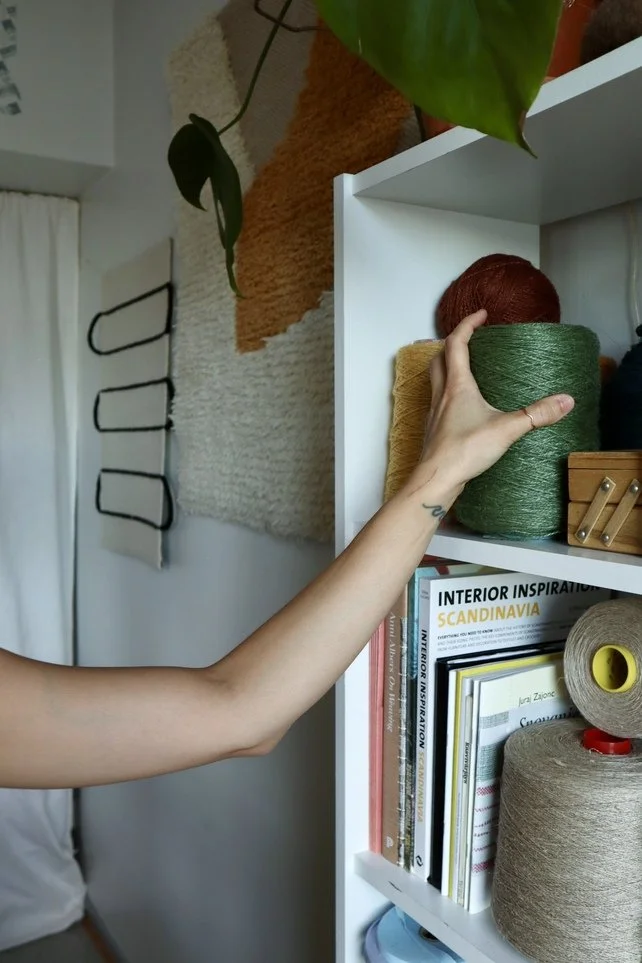
I often think about the famous quote by Anni Albers, that creating something is actually listening to the materials. In my free time, I like to go to flea markets and recycling centres to browse the handicraft and textile sections. You can find some really good quality materials, but still, they come in limited quantities. This is what mostly determines the direction of my work.
A given material defines the final product so that it corresponds to its function. In other words, the material’s characteristics guide me to work with it in the most effective way. When you have good materials, they do the work for you.
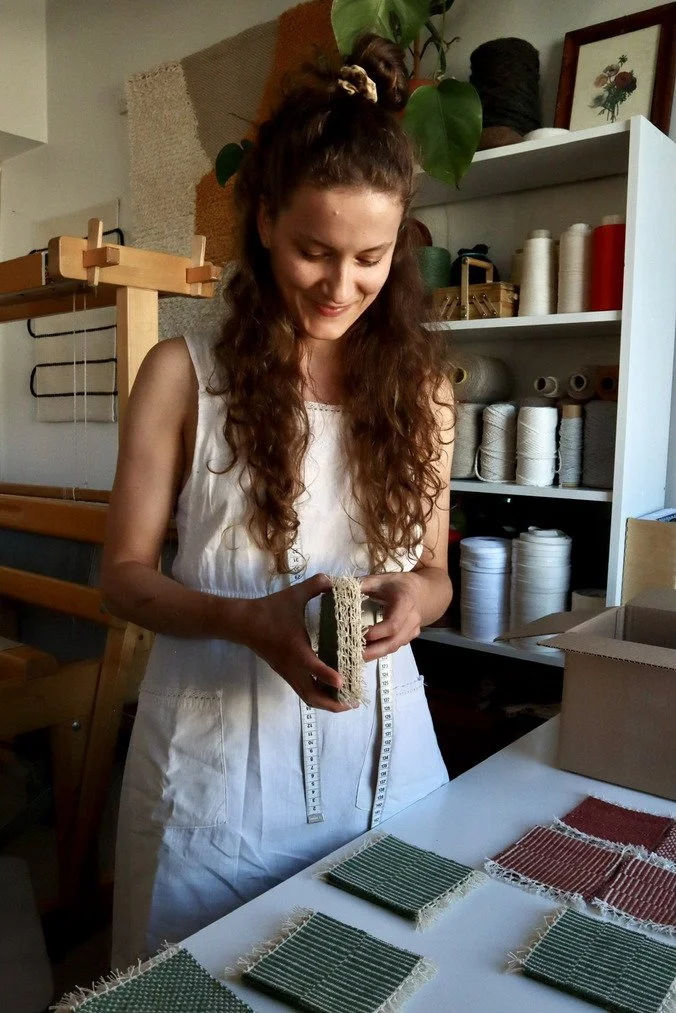
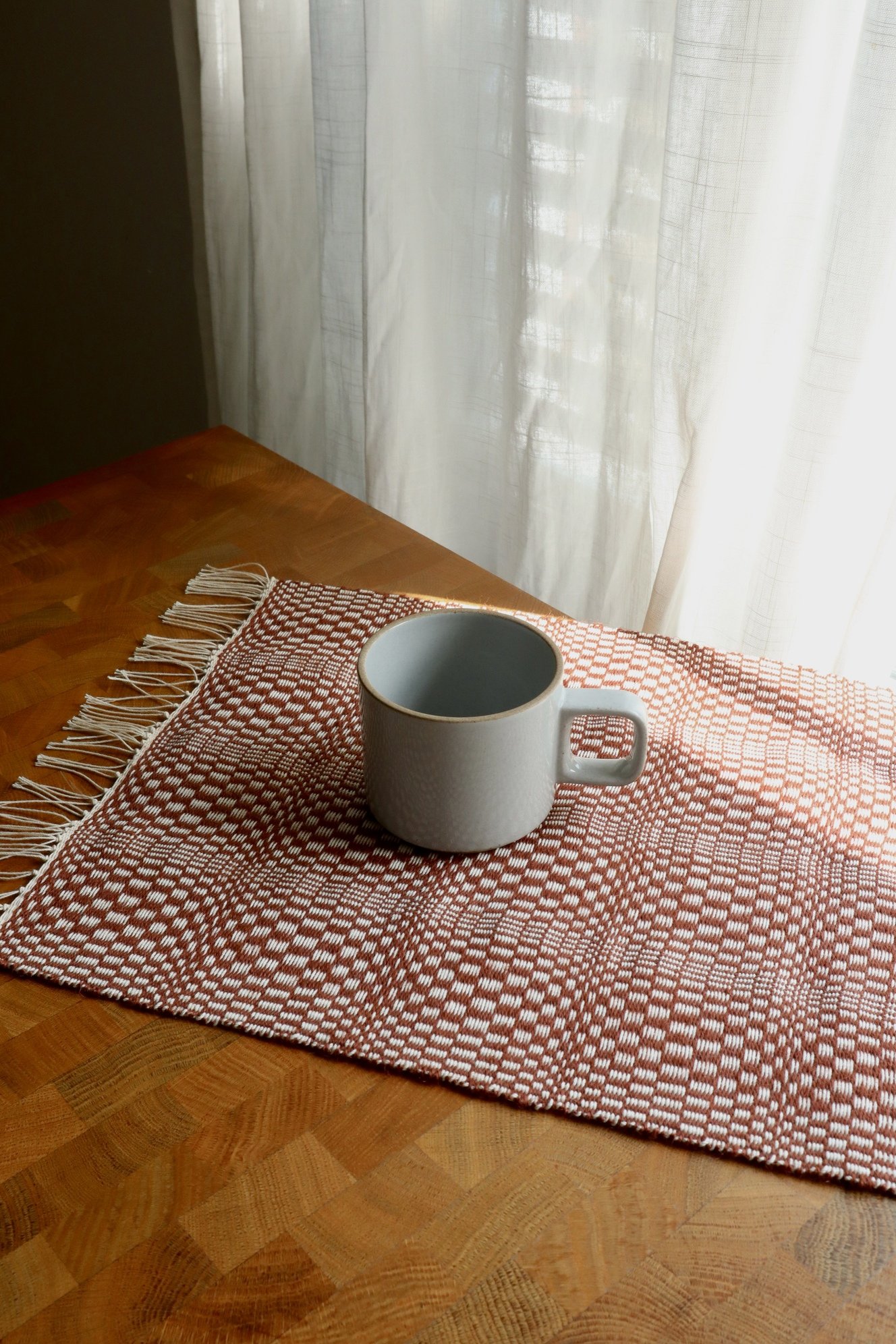
That is how I got into weaving coasters, for example. It all began with finding one jute yarn cone in a recycling shop. Jute yarn is strong, long-lasting, and does not shrink after washing, so it is perfect for coasters.
Obviously, one might say that this is not the smartest way to do business, making products in such small quantities. But really, when you’re standing in those recycling centres and see the amounts of stuff there, you do not want to contribute to the course of overproduction.
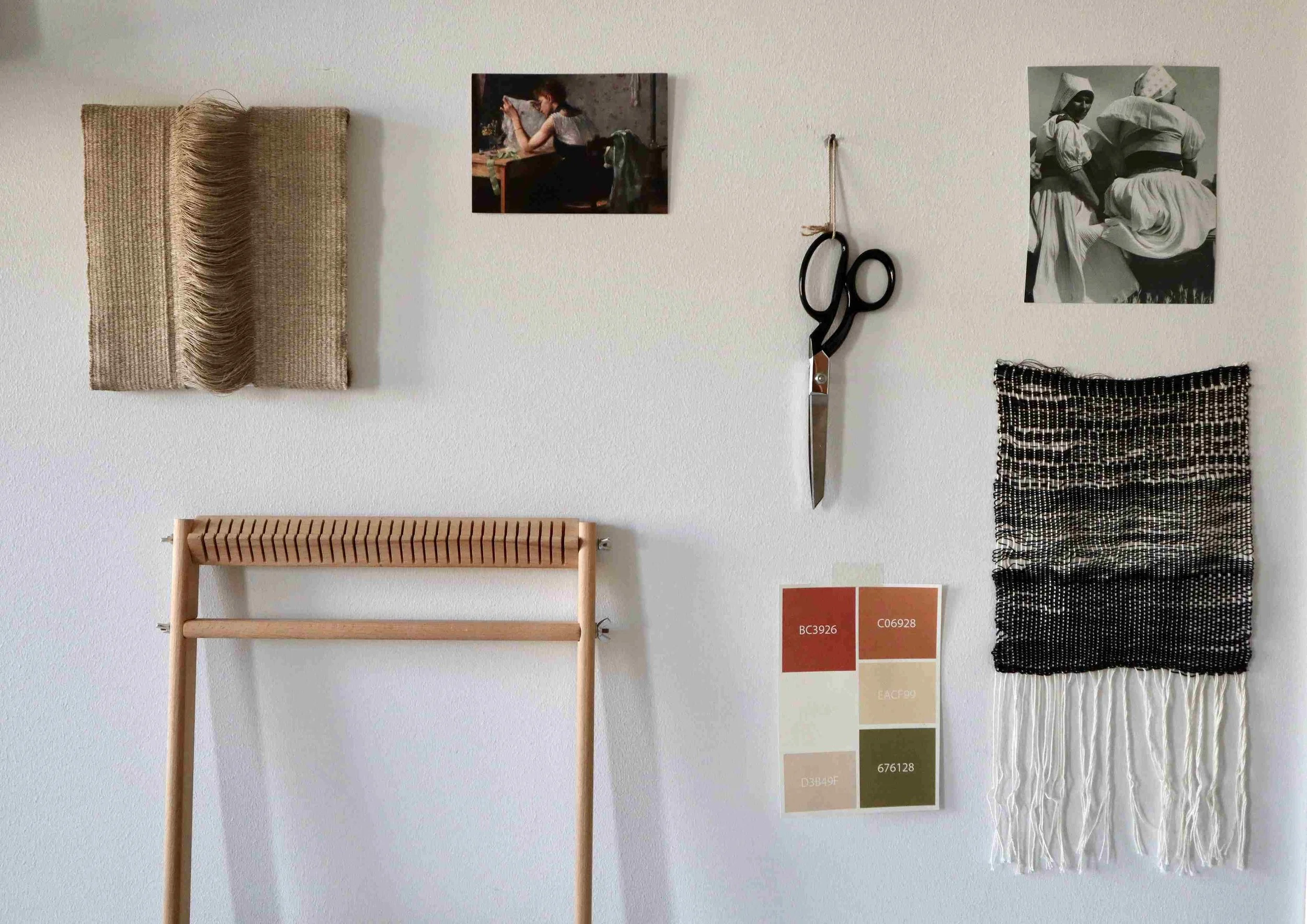
I often get new ideas by going through my old works and sample pieces, even from years ago. It is a moment of reconnecting with those ideas I had then, grasping them in the current moment, and taking them further in sometimes completely different directions.
How have the landscapes, traditions, and cultural heritage of your upbringing influenced the way you approach textiles and making today?
Although I grew up in the city, we spent summers with my siblings in the countryside, where my grandparents had a huge vegetable garden. Helping them in the garden was a completely natural part of our summer holidays, along with picking elderflowers, rose hips, and wild flowers on the hills below the Carpathians.
It was a completely natural and obvious way to spend our time back then, but it was only as an adult that I realized how fundamental it was. What kind of knowledge and closeness to nature, and the overall notion of care, it gave me.
None of my grandmothers or great-grandmothers did handicrafts as their main occupation. Back then, handcraft work occupied the space between free time and necessity. Many of my ancestresses, alongside raising their kids and working, did some kind of handcraft, whether it was embroidery, knitting, or crocheting.
Those products lasted many dozens of years and are still usable today. Those neat, elaborated, and detailed works carry a tangible message of hours of labour and patience. And that is where I started to see the real meaning of the so overused word, sustainability.
From my point of view, sustainability is about the interweaving of the past with the present. The past can guide us in learning from objects that have survived to this day. How can we create today so that future generations can say the same when they inherit what we leave behind?
I used to find myself at a disadvantage because I don’t have a formal education in textile design. I didn’t even study at a university in Finland, so I didn’t develop a network of contacts in the textile field. Yet deep within me, I know that through thoughtful labour, dedicated effort, patience, and curiosity, everything can be learned. This is also a very valuable heritage that has been passed down to me.
Natural materials are at the heart of your practice, from inherited linen textiles and locally sourced fibres to naturally dyed yarns. What have these materials taught you about attentiveness, responsibility, and the stories that objects can carry?
I will elaborate on the previous question, where I mentioned my summers in the countryside. Working in the garden, adapting days in the field to the weather and seasons, gives a good overview of the cycle of life. It begins with a seed planted in the soil, sprouting, blooming, and being harvested. Eventually, it becomes plant matter that returns to the soil, enriching it for the next season.
In an ideal world, objects made from natural materials should be subject to the same principle. When using only natural materials in my work, that cycle of life is reflected there. So once their lifespan ends and their functionality is exhausted, they don’t have to become surplus waste. The natural materials from which the products are made allow them to return to the soil.
As the maker, I cannot control how the product will ultimately be disposed of. However, I can choose the materials and methods I use to create in a way that doesn’t add unnecessary burden to the environment. In my view, this is the responsibility of every maker.
Your work creates a thoughtful connection between the object, the maker, and the person who lives with it. How do you hope people experience your work once it becomes part of their everyday life?
I hope they experience it as a connection between us humans, made through that object. Each and every line of woven yarn passed through my hands. And I hope it will bring people joy, as it gave me while creating it.
By being supported as an independent maker, I am given more time and resources to continue creating works that others can later obtain. So there is this nice loop created between the maker and the user.
Looking at the contemporary landscape, where do you think lies the greatest potential to preserve and redefine the value of textile crafts and material based practices today?
In sharing skills and knowledge, learning from people, not even necessarily professionals, but enthusiasts who have a passion and need to question and challenge the current times and the system we live in.
There is great potential in collaborating with other creatives, sharing ideas, and also struggles. We could benefit from it as individuals as well as a society.
I am very grateful to have many creative and inspiring people around me. Every time we meet and chat, I leave so charged and inspired! It also helps to feel less lonely, knowing that everyone struggles from time to time.
Are there any new materials, techniques, or directions you are currently exploring that feel especially connected to the evolution of your practice?
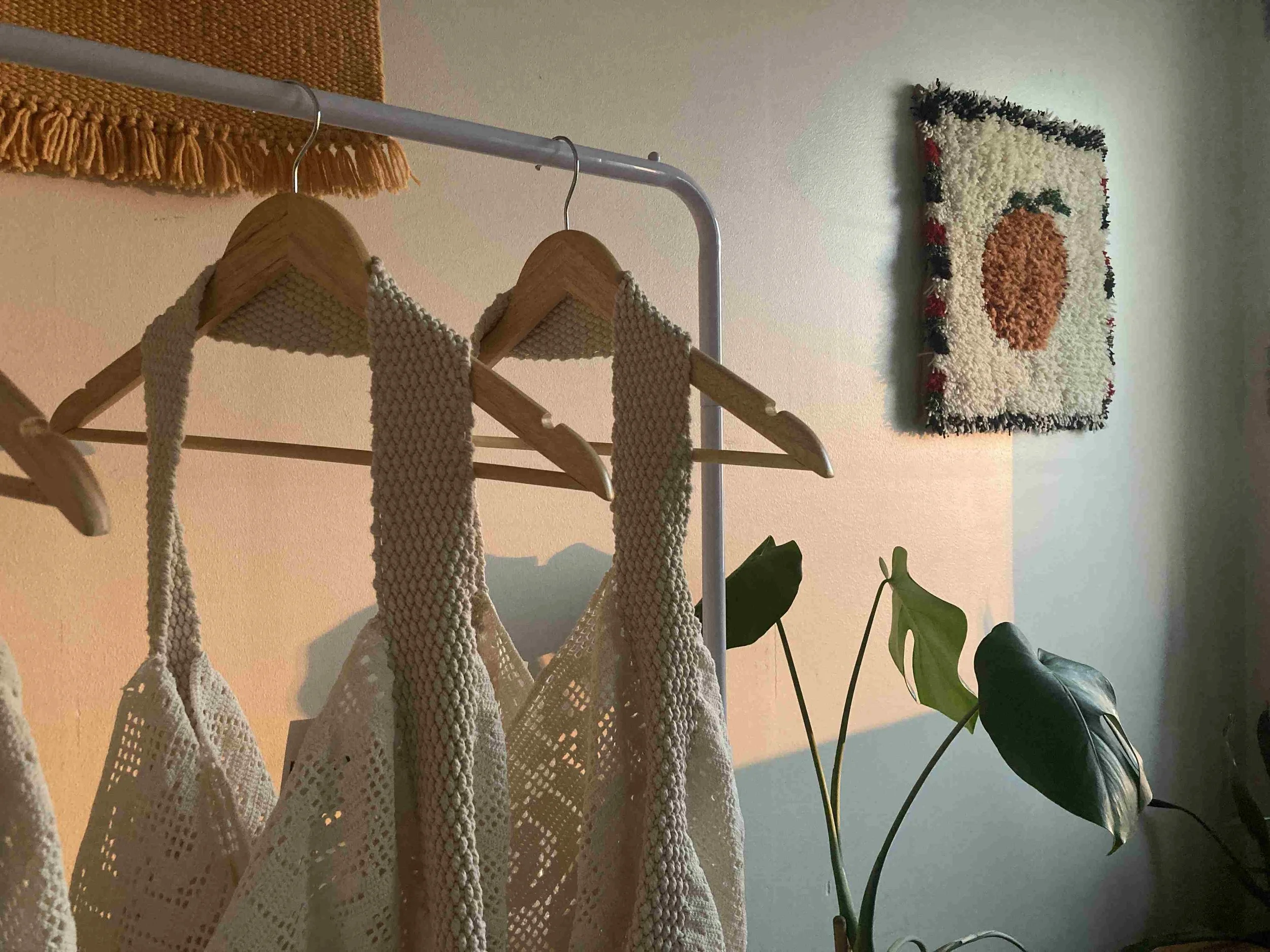
I’ve been planning for some time to interconnect weaving with garments and accessories. Last summer, I made a bag collection from a repurposed crocheted blanket. The handle of the bag was woven directly into it. That was fun! I would love to keep developing the idea and make some new products.
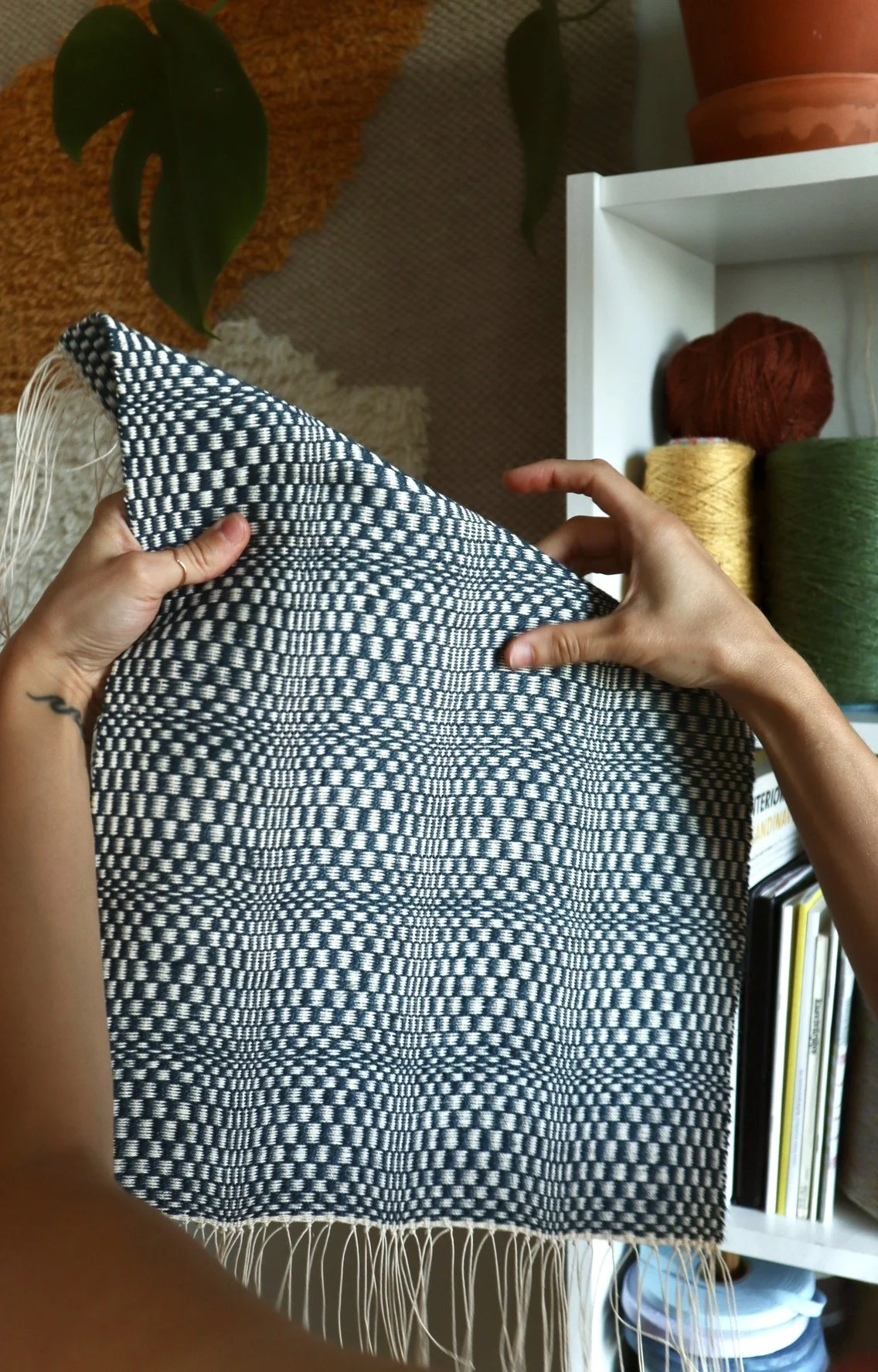
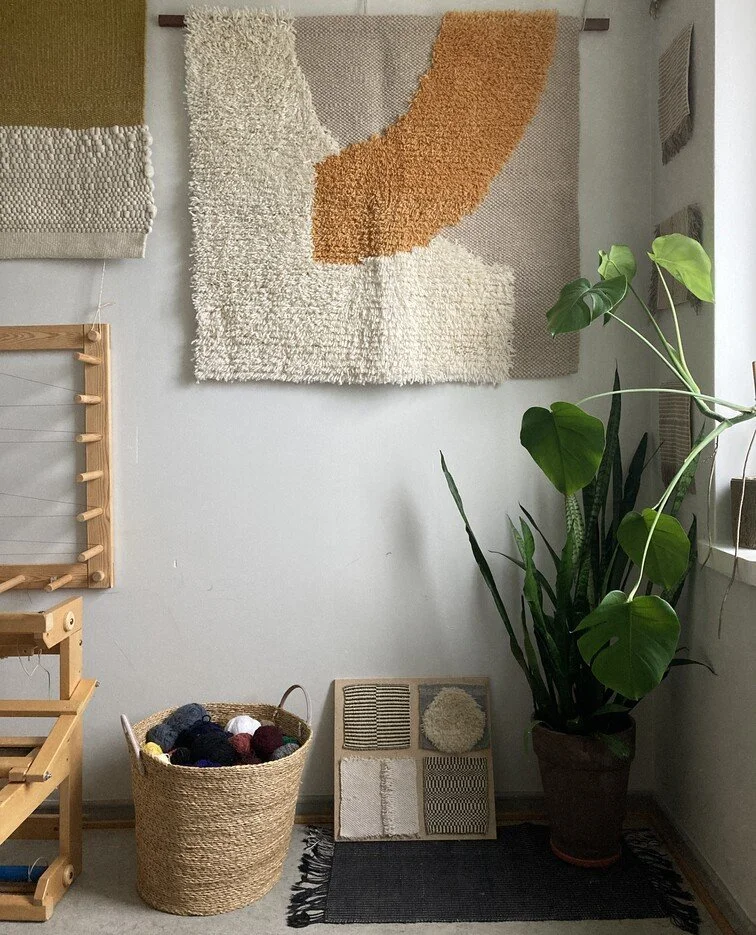
I have also been geeking out over weaving patterns. It is fantastic how many different patterns can be woven! I want to weave something big again, like a huge rug or something. It has been such a long time!
How can people engage more closely with your work, whether through exhibitions, collaborations, or upcoming projects?
On my website, www.noonthestudio.com, and through my Instagram, @noon_thestudio. I am very happy to chat, plan a project, and do custom works!
There is a design market in August that I am taking part in. And there are also new workshop collaborations currently being planned for the autumn! I post most of the updates through social media.
All photos belong to Natália.
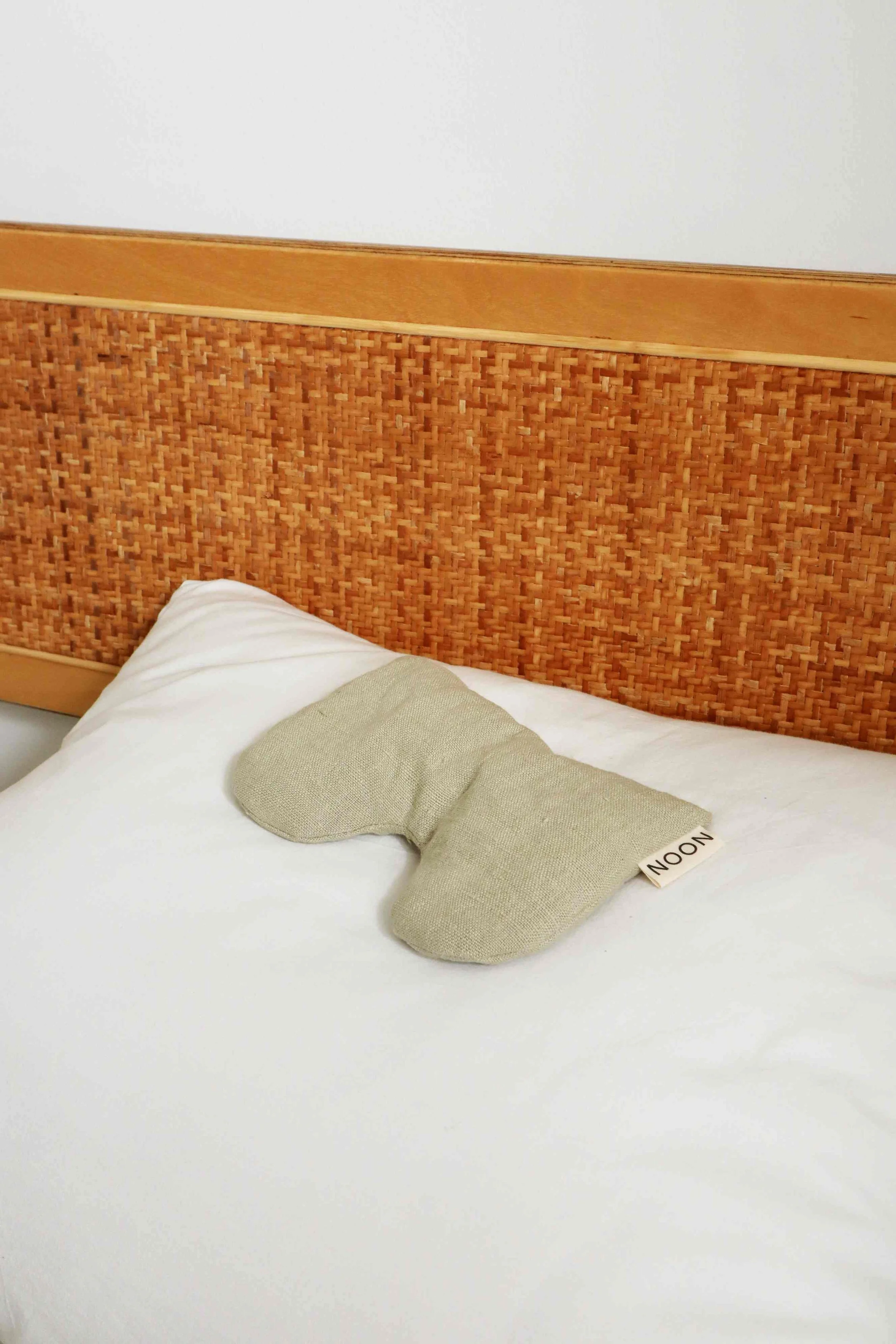
Handmade linen eye mask by Natalia Otrubová in Helsinki, filled with dried lavender flowers grown in her garden and flax seeds. The flax seeds add weight to the mask, helping it fit against the face.
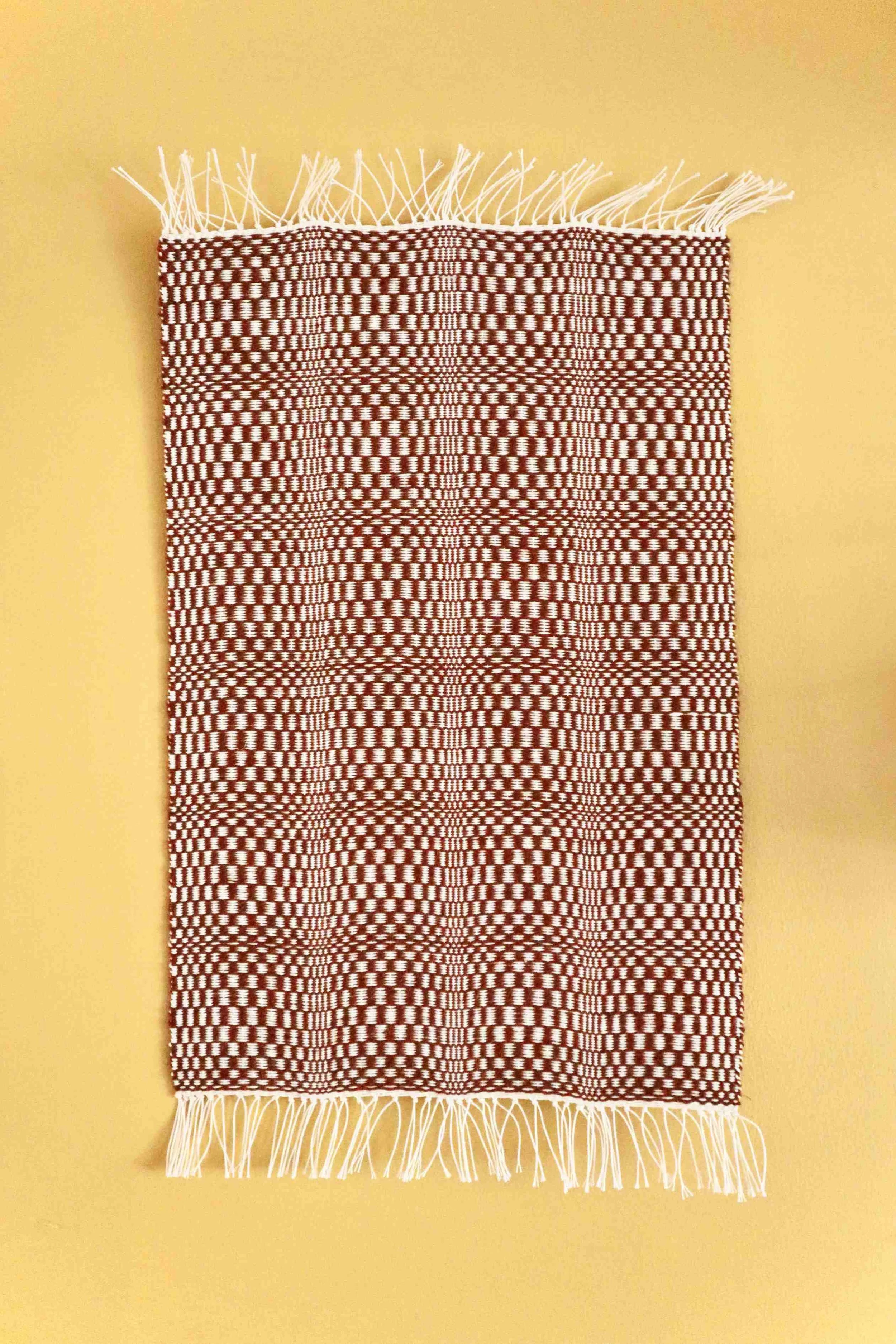
Handwoven set of two placemats made by Natalia Otrubová in Helsinki using repurposed yarns. Woven in a checkered pattern, the piece combines jute and cotton and is finished with a 4 cm fringe. Each piece is handmade, allowing slight variations in size.
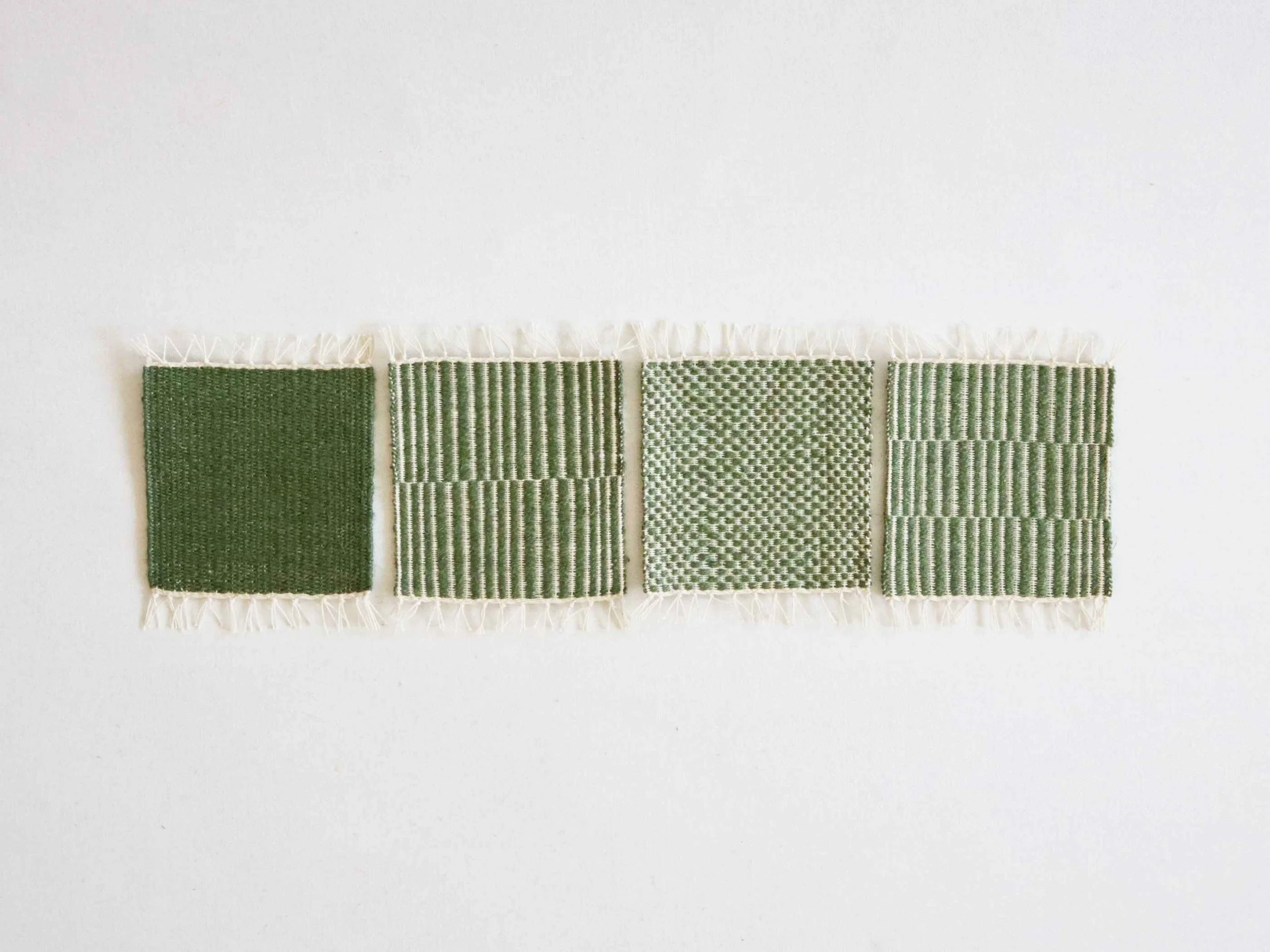
Handwoven set of four coasters made by Natalia Otrubová in Helsinki using repurposed yarns. The woven construction combines jute and cotton and is finished with a short fringe along the edges. Each set is handmade, allowing slight variations in size.
